



Our Approach to Assessment
- Understand what students know and can do
- Identify how securely learning has been achieved
- Inform next steps in teaching and learning

Attainment Judgements
- Below the expected curriculum standard
- At the expected curriculum standard
- Above the expected curriculum standard

The 1–9 Assessment Scale (FS1 to Year 8)
- Shows where a student is currently working
- Helps track progress over time
- Supports clear and consistent communication with families
| Attainment | ||||||||
|---|---|---|---|---|---|---|---|---|
| Below Expected | Working towards curriculum |
Working at expected | Working Above | Working Well above | ||||
| 1 | 2 | 3 | 4 | 5 | 6 | 7 | 8 | 9 |
Understanding Progress
- Learning new skills and knowledge
- Building on previous learning
- Making sustained progress over time
A student may be making strong progress even if they are still working towards the expected standard. This is viewed positively. Assessment reflects both attainment and progress, rather than a single test result or percentage score.
Assessment Across the School
- Foundation Stage
- Primary Years
- Years 7 and 8


Assessment in iGCSE (Years 9–10)
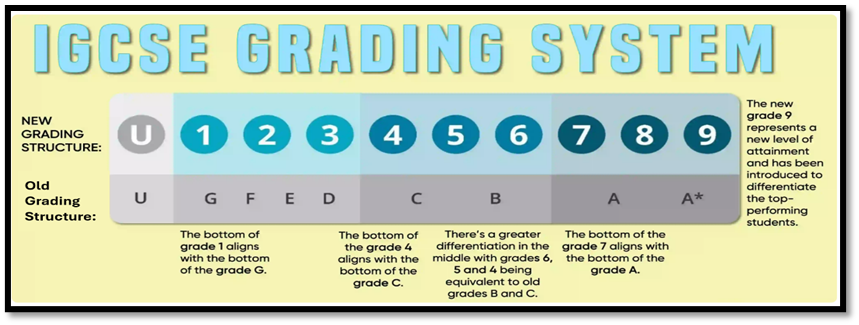
iGCSE results are reported using a 1–9 grading scale:
- 9 – Highest grade
- 1 – Lowest passing grade
- U – Ungraded (did not pass)
How the grades compare:
- 9 → Higher than the former A*
- 8–7 → Similar to A
- 6–5 → Similar to B / strong C
- 4 → Standard pass
- 3–1 → Below pass standard
- U → Ungraded
This grading system aligns with the language used in earlier years:
- Below expected → Working towards Grade 4
- At expected → Around Grades 4–5
- Above expected → Grades 6–9
This ensures clarity and continuity as students transition from internal assessment into formal external examinations.

Assessment in A Levels (Years 11–12)
In Years 11 and 12, students study A Level qualifications, which are internationally recognised and externally examined.
- Is set and marked by external examination boards
- Typically takes place at the end of the course
- Focuses on depth of subject knowledge, analysis, evaluation, and independent thinking
- A* – Highest grade
- A–E – Pass grades
- U – Ungraded
- Prepare students for final external examinations
- Inform teaching, intervention, and academic guidance
- Develop independent study skills required for higher education
Final A Level grades are awarded solely by the external examination boards, ensuring rigour, consistency, and international comparability.
Why We Use This Approach
- Prioritises learning and progress rather than raw scores
- Reduces unnecessary pressure on students
- Encourages deep understanding rather than rote learning
- Enables teachers to support and challenge students effectively